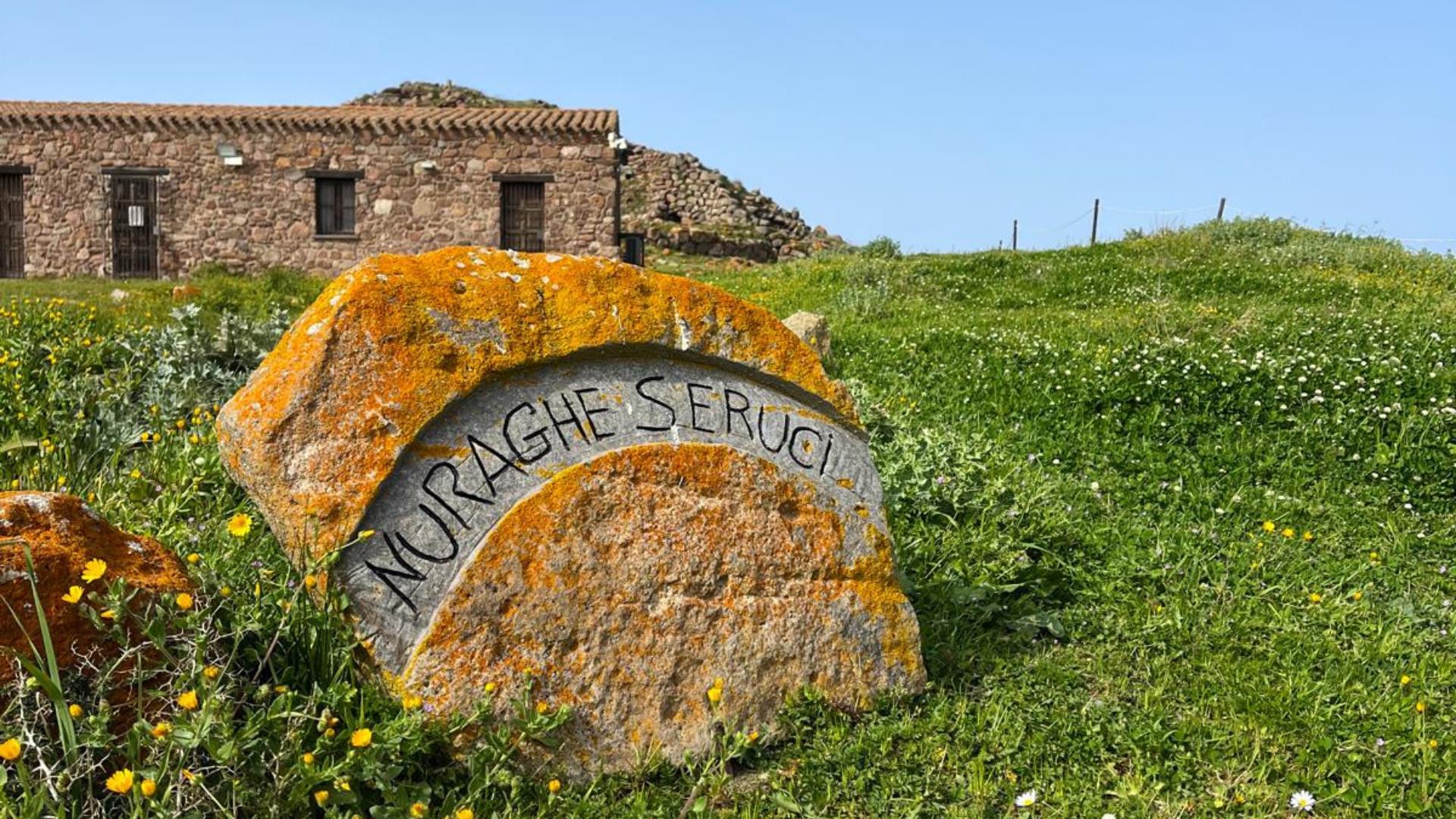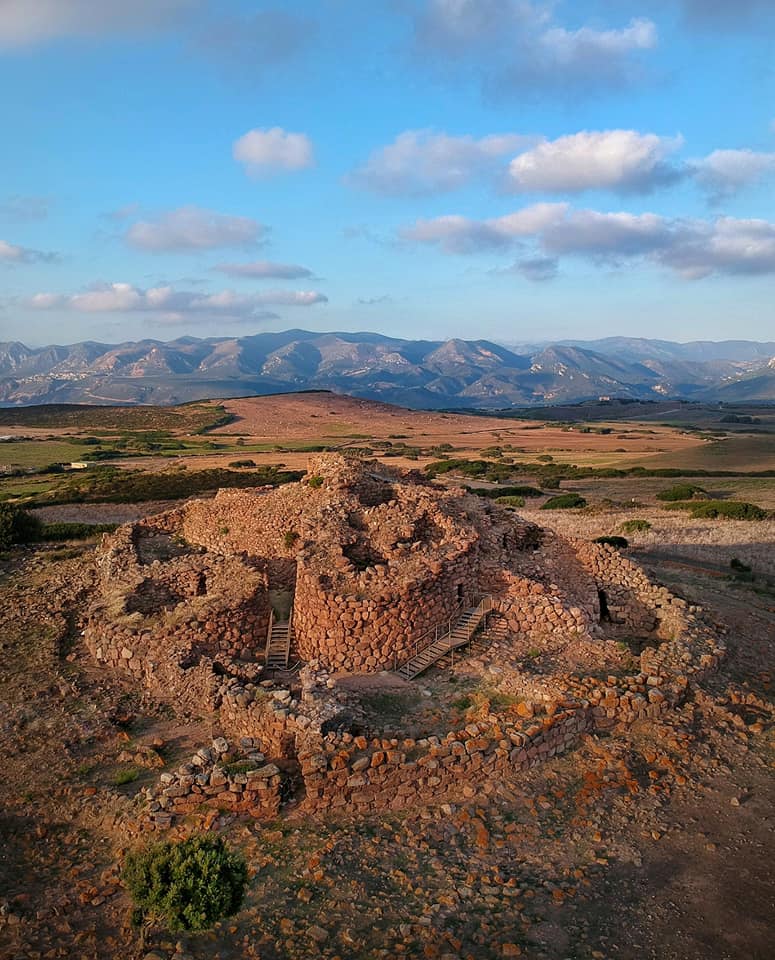
About 10 km from Portoscuso, in the Gonnesa countryside, the Seruci nuragic complex is one of the most interesting — and least crowded — archaeological sites in Sulcis-Iglesiente. At its centre stands a complex nuraghe with a penta- or hexalobate plan: a central tower surrounded by a bastion of five or six smaller towers, built starting in the late 14th century BC and inhabited until the 10th century BC, in the Final Bronze Age. The village was discovered in 1897 by Ignazio Sanfilippo and studied soon after by archaeologist Antonio Taramelli, who documented its layout: it's considered the most important nuragic settlement in the Sulcis and one of the most imposing in Sardinia.
A village of about a hundred huts
Around the nuraghe spreads one of Sardinia's largest nuragic villages: over a hundred circular huts, grouped into six districts across about 6 hectares. Of most huts, only the stone bases survive today, but they're enough to make out the village's layout clearly. At the centre sits a larger hut, likely a communal meeting place. On a hill facing the nuraghe stand two giants' tombs, used as the village's necropolis.
Getting there and visiting
The site lies along the road between Gonnesa and Portoscuso, with a short walk from the car park. Entry is free. Since there's no fixed on-site staff with set hours, it's worth checking opening days and times before you go — in some periods access is only possible within certain time windows.
Why it's worth a visit
It's an open-air site, among stones and Mediterranean scrub, with no crowds and no ticket queue — the kind of place you visit at a slow pace, maybe pairing it with a day at a nearby beach, like Sa Punta de s'Aliga or Portopaglietto itself.
- The ground is uneven and partly unpaved: comfortable walking shoes are best.
- Bring water and a hat: the site is entirely outdoors, with no shaded spots.
- Check opening times before heading out, by contacting the Gonnesa tourist office.
- A great stop for photography: the central tower and the huts make for good wide shots, even from above with a drone.
Message us on WhatsApp for tips on putting together a day of nuraghi and beaches: +39 347 915 5119.