
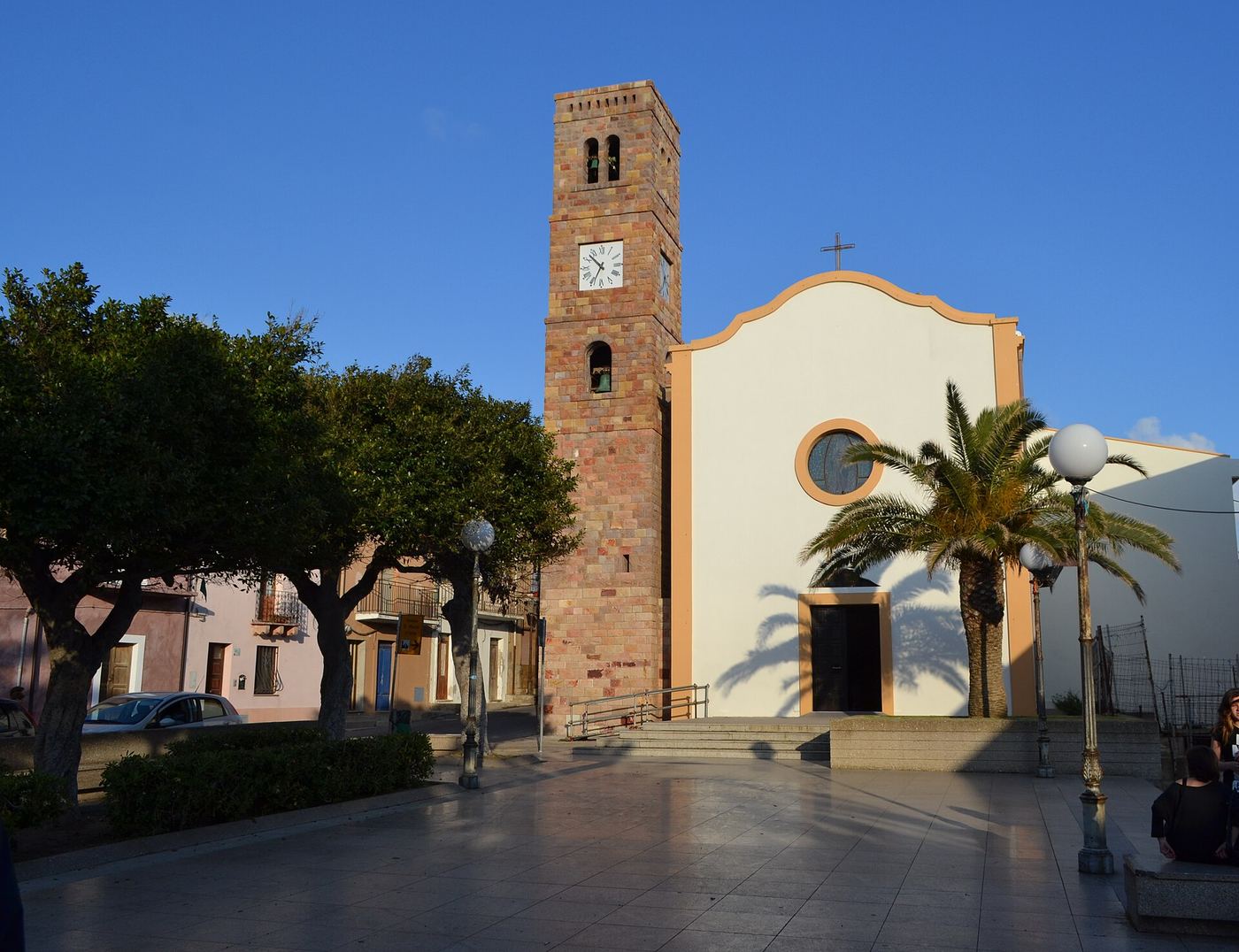
The church of Santa Maria d'Itria, in the heart of Portoscuso, holds one of the most tangled stories of faith and legend in south-west Sardinia. The name "d'Itria" comes from Odigitria, Greek for "she who shows the way": the cult's roots go back to 1594, with the earliest written records of the feast dated 1630.
The legend of the painting
According to tradition, the sacred image — attributed to Saint Luke the Evangelist — was kept in Constantinople, in the church of Odigi, where Empress Pulcheria had it placed in the 5th century. During a period of unrest in the city, the painting was sealed in a cedarwood chest and entrusted to sailors bound for Italy. Their ship wrecked off the Sardinian coast, and it was fishermen from Portoscuso who recovered the chest — in the very years the local tuna trap was being founded, around the mid-17th century.
The legend continues: during a Saracen raid, the effigy was carried in procession towards the new church and, as the story goes, was struck by two bullets. Years later, the tuna trap's owner sent the painting to Genoa for restoration — but it never came back. In its place arrived the Genoese wooden statue still venerated today: she is the centrepiece of the patronal feast.
The procession at sea
The feast is celebrated on Pentecost Tuesday, 52 days after Easter — a moveable date, so it shifts each year between late May and mid-June. It's one of the most keenly felt occasions of the year in Portoscuso: the statue of the Virgin is loaded onto a deep-sea fishing boat and taken towards the Portopaglietto headland for a floral tribute to those lost at sea. On its return, the solemn procession through the town streets begins, accompanied by the trumpeters of Oristano's Sartiglia, folk groups from across Sardinia, horsemen, and crowds of the faithful and visitors. The most moving moment comes on the return to the church, when the Madonna is wrapped in a mantle of roses and "greets" the crowd with three bows.
Why it's worth being there
It's not just a religious feast: it's one of the rare moments that truly shows the bond between Portoscuso and the sea that has always sustained it, from the tuna trap onward. The church of Santa Maria d'Itria is a few minutes' walk from Villa Red Melons, as is the stretch of seafront the procession passes through.
Practical tips
- The date changes every year: since it's tied to Pentecost, it's worth working it out (52 days after Easter) or checking the Municipality of Portoscuso's events in spring.
- The town fills up: if you're coming specifically for the feast, book ahead.
- To watch the statue being loaded and unloaded, it's worth getting a spot along the coast towards Portopaglietto a little early.
Message us on WhatsApp if your visit coincides with the feast — we'll help you plan around it: +39 347 915 5119.